Local Conditions
Why Pinellas exteriors weather the way they do
Pinellas is a peninsula, and that single fact drives most of what we see on its roofs and siding. Water on three sides means humidity has nowhere to go, and homes sit somewhere on a gradient between two very different problems depending on which way they face.
On the Gulf side — Sand Key, Island Estates, Clearwater Beach, Ozona and Crystal Beach — salt spray is the dominant load. It settles on every surface, holds moisture against it, and corrodes screen frames, gutter hardware and flashing. Salt does not stain the way algae does; it hazes and dulls, which is why homeowners so often read it as paint that has simply aged.
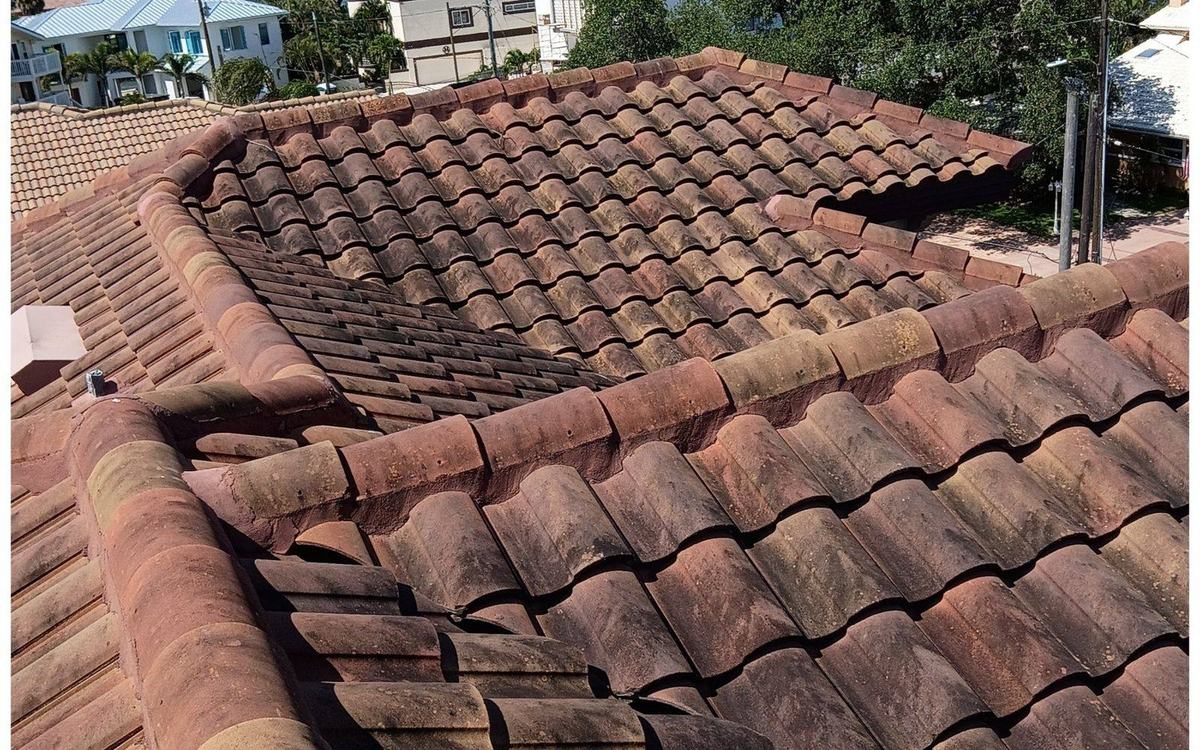
Inland, the problem inverts. The mature live-oak canopy over Old Palm Harbor, Countryside, Safety Harbor and the older blocks of Largo keeps roofs shaded and slow to dry, and drops a constant supply of leaf litter and tannin. Shade plus organic debris is the ideal environment for Gloeocapsa magma, the black-streak algae that feeds on the limestone filler in asphalt shingle.
Tarpon Springs sits at the sharp end of both. The Anclote River estuary supplies salt and humidity together, and it is consistently one of the fastest-regrowth pockets we work in.